
Organizing committee
Prof. dr. Bartolomeo Civalleri ✉
Università degli Studi di Torino, Italy
Theoretical Chemistry Group
www.chemistry.unito.it
Prof. dr. Guillaume Maurin ✉
Université de Montpellier - CNRS, France
Institut Charles Gerhardt Montpellier
www.icgm.fr
Prof. dr. Veronique Van Speybroeck ✉
Ghent University, Belgium
Center for Molecular Modeling
molmod.ugent.be
Local organizing committee
Bartolomeo Civalleri
Lorenzo Donà
Mattia Raimondo
Sven Rogge
Contact
You can contact us at mofsim2026@gmail.com.
Registration & abstract submission
Submission deadline for posters: July 15th
Metal-organic frameworks (MOFs) are one of the most intriguing materials of current science
The inherent hybrid nature of MOFs, being composed of inorganic and organic fragments, gives rise to an almost unlimited number of existing and hypothetical MOFs. As a result, an experimental screening of new candidates for state-of-the art applications becomes unfeasible. Instead, one has to rely on computational techniques to predict the properties of MOFs and allow for the application-oriented design of new materials. Due to their hybrid nature, modeling these materials requires simulation techniques that are on the crossroad of molecular and solid-state modeling and data science.
The MOFSIM2026 workshop aims to address the current state of the art, limitations, and perspectives on the computational tools applied to metal-organic frameworks with a special emphasis on four main topics:
1. Accelerating Porous Materials Design and Development - A Data-Driven Approach
2. A century from the Schrödinger equation: how quantum mechanics has changed the modeling of MOFs
3. Elucidating structure-property of MOFs: From synthesis to advanced characterization
4. Bridging classical models to machine learning interatomic potentials
During the workshop, computational modelers as well as experimentalists will share their expertise on each of these four topics. Each topic will be introduced by a renowned plenary speaker and several invited speakers confirmed their presence. Each session will be followed by a plenary discussion leaded by expert discussion leaders.
We are expecting the attendance of about 150 researchers, including PhD students, postdoctoral and senior researchers as well as renowned experimentalists in the MOF field to stress the most important open questions. Finally, to encourage discussions even further, a poster session and oral contributions are included as well.
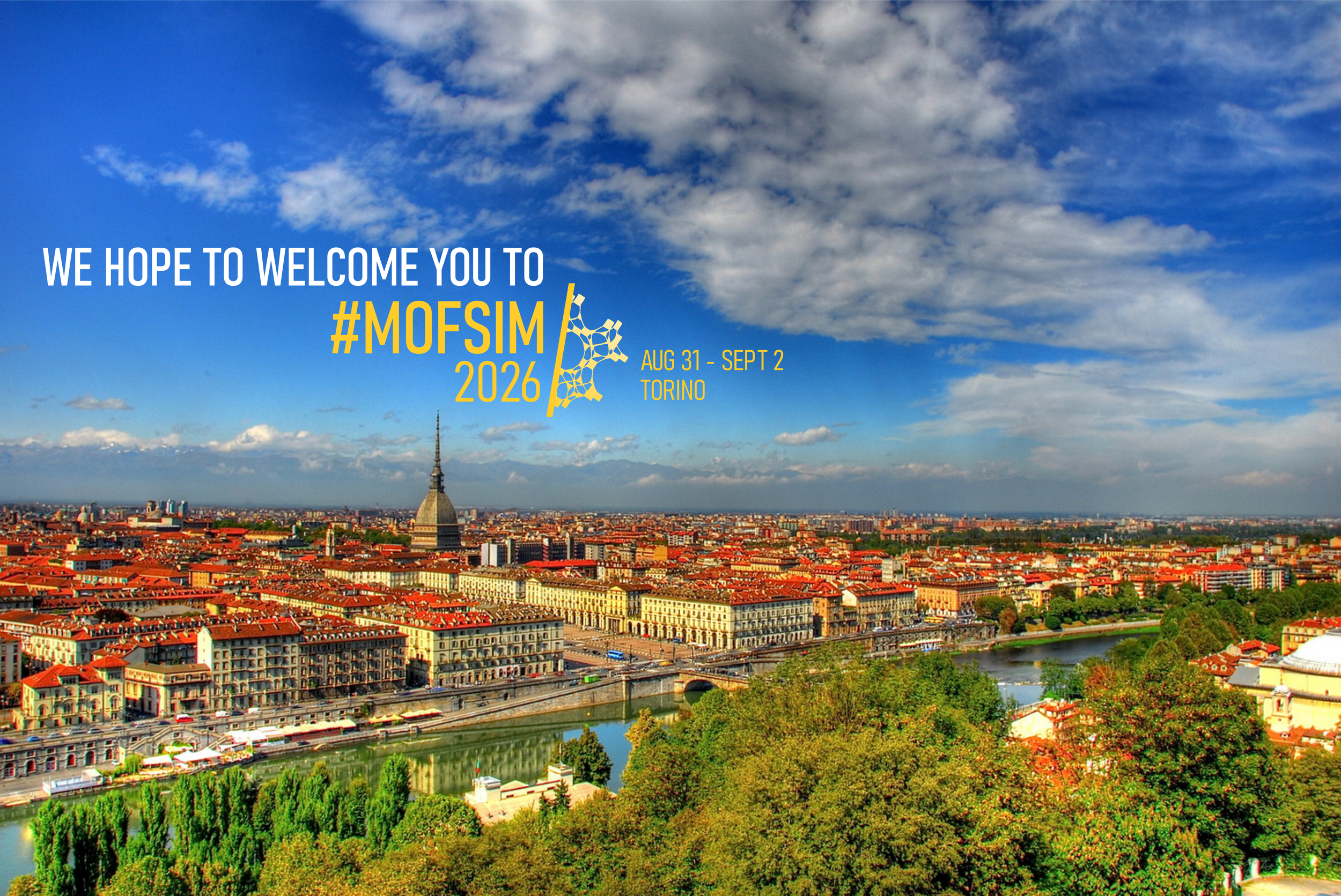
Photo credits: “Rooftops” by slack12, CC BY-NC-ND 2.0
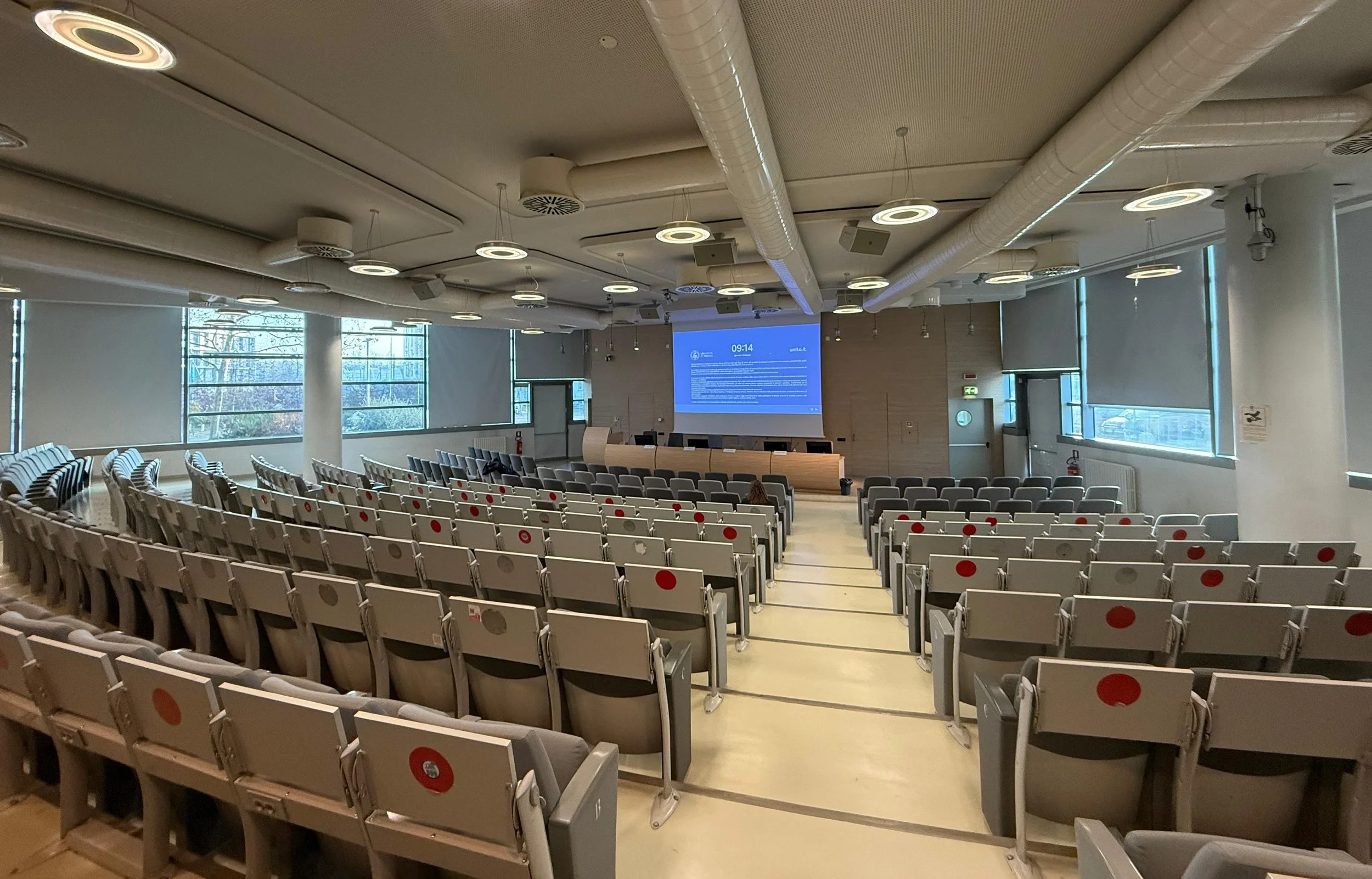
Venue
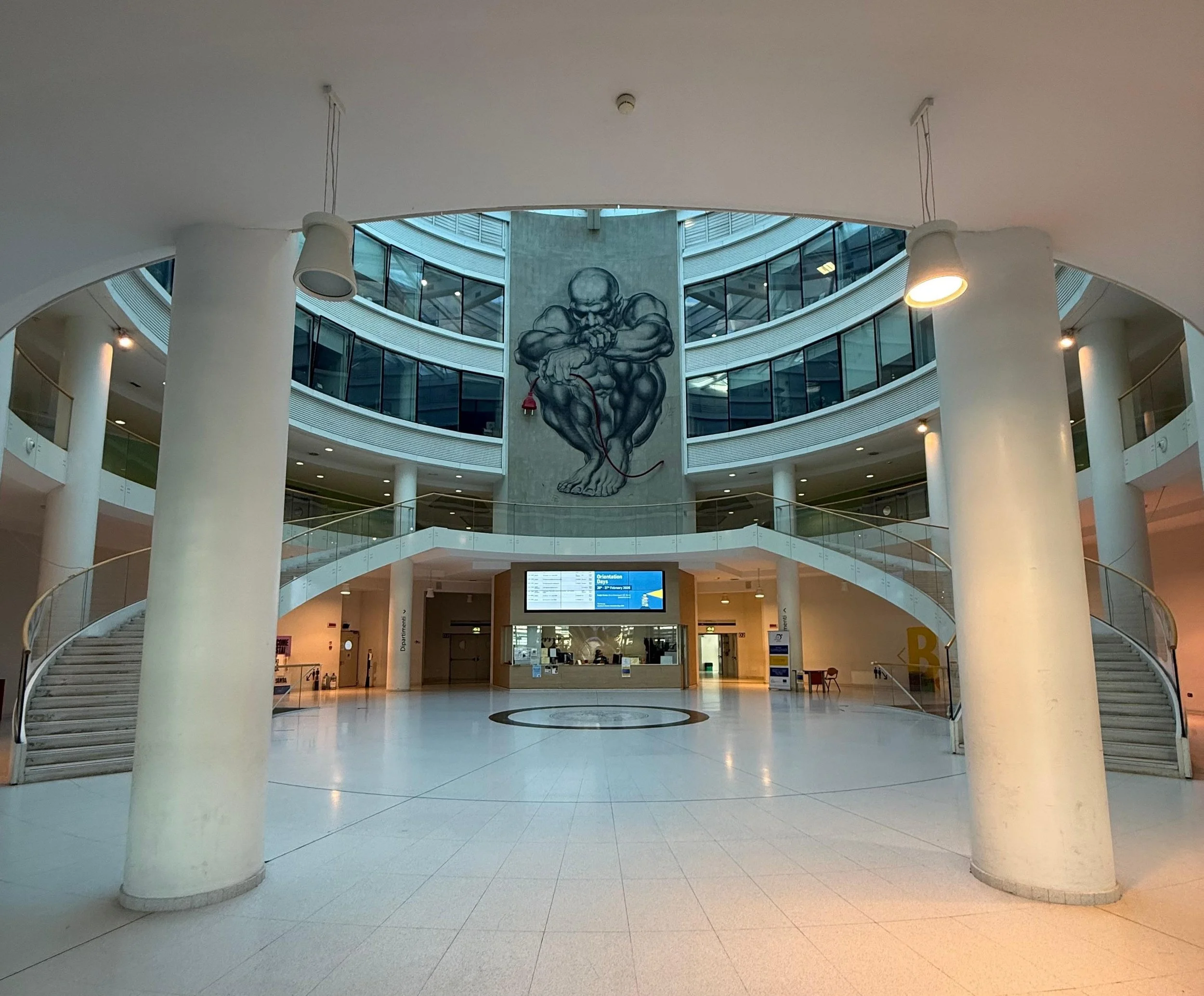
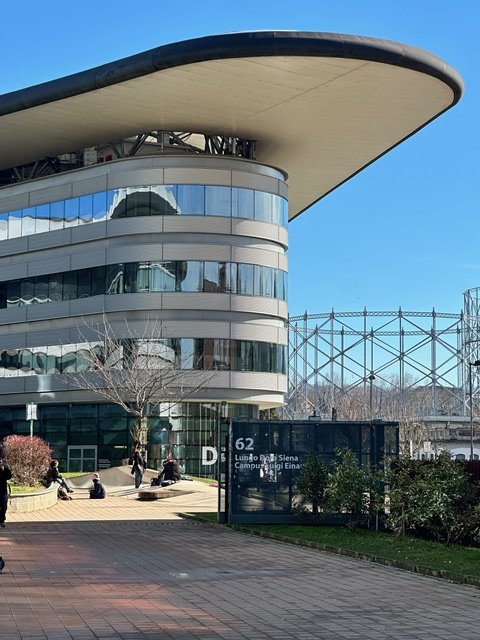
Campus “Luigi Einaudi” (CLE)
Lungo Dora Siena 62 - Turin (Italy)
Sponsors


Poster prize sponsor

Under the auspices of the Division of Theoretical and Computational Chemistry – Italian Chemical Society